

ATR Trailing Stop: Dynamic Exit Strategy That Adapts
The exit is more important than the entry — a trading truism backed by data. A mediocre entry with an excellent exit outperforms an excellent entry with a mediocre exit in almost every backtest we've run. The ATR trailing stop is the most effective dynamic exit method available because it solves the core exit dilemma: how to let winners run while protecting accumulated profit. By tying the stop distance to actual market volatility, it adapts automatically to whatever conditions the market presents.
Core Concept
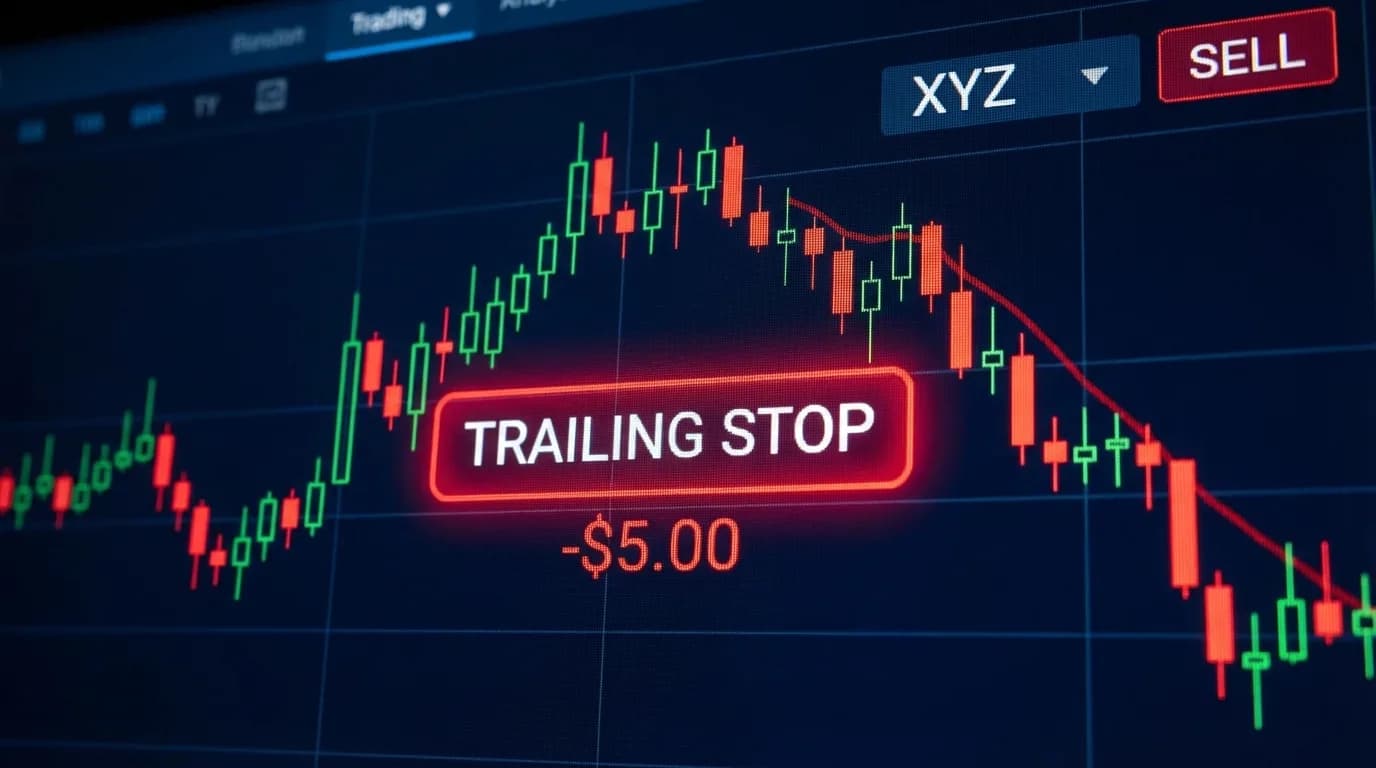
A trailing stop moves in one direction only — it follows price upward for longs (downward for shorts) and never retreats. An ATR trailing stop sets the trail distance based on ATR rather than a fixed percentage or dollar amount.
For a long trade: Stop = Highest Price Since Entry - (ATR × Multiplier). As price rises, "Highest Price" increases, pushing the stop up. If price falls, the stop stays where it is. When price drops enough to hit the stop, the trade exits.
The ATR multiplier determines the "breathing room." Larger multipliers give more room (fewer stop-outs, but you give back more profit when the trend ends). Smaller multipliers trail tighter (capture more profit, but get stopped out by normal noise more often).
The Chandelier Exit
Chuck LeBeau's Chandelier Exit is the standard implementation. It uses a lookback period for both the highest high and ATR:
Long Stop = Highest High (22 periods) - ATR(22) × 3.0
Short Stop = Lowest Low (22 periods) + ATR(22) × 3.0
The 22-period lookback roughly represents one month of daily data. The 3× multiplier provides wide trailing that survives most pullbacks within a trend.
In our BTC/USDT daily backtest (2020-2024), using a simple EMA crossover for entries and the Chandelier Exit (22, 3.0) for exits produced a 1.61 PF. The same entry with a fixed 10% trailing stop produced 1.28 PF. The same entry with a fixed 5% trailing stop produced 1.09 PF. The ATR-adaptive exit outperformed both fixed alternatives substantially.
Wilder's Volatility Stop
An alternative ATR trailing stop from Welles Wilder uses a shorter lookback and tighter multiplier, intended for more active trading:
Stop = Close - ATR(7) × 2.0
Unlike the Chandelier Exit (which uses the highest high), Wilder's version trails from the close. This makes it slightly tighter and more responsive. In our BTC 4H test, Wilder's Volatility Stop (7, 2.0) captured slightly more profit per trade than the Chandelier (22, 3.0) on shorter-duration trades but performed worse on long trends because it got shaken out by pullbacks more often.
Multiplier Optimization
We tested multiple multipliers on BTC/USDT daily with the same entry signal (50/200 EMA crossover):
| Exit Method | Trades | Avg Win | PF | Max Drawdown |
|---|---|---|---|---|
| Chandelier 22, 2.0 | 42 | 5.2% | 1.44 | 16% |
| Chandelier 22, 2.5 | 38 | 7.1% | 1.56 | 19% |
| Chandelier 22, 3.0 | 34 | 9.4% | 1.61 | 22% |
| Chandelier 22, 4.0 | 28 | 11.8% | 1.54 | 28% |
| Fixed 5% trail | 56 | 3.1% | 1.09 | 14% |
| Fixed 10% trail | 38 | 6.8% | 1.28 | 24% |
The 3× multiplier hits the sweet spot — best profit factor (1.61). Wider (4×) captures bigger individual wins but gives back too much on each losing trade. Tighter (2×) gets stopped out too frequently during normal pullbacks. All ATR methods beat both fixed trailing stops.
Implementation Details
Ratchet Mechanism
The stop must only move in the favorable direction. On each new bar, calculate the new potential stop level. If it's higher than the current stop (for longs), update. If it's lower, keep the existing stop. This one-direction ratchet is what makes trailing stops effective — they lock in gains without ever giving back protection.
ATR Recalculation
Should ATR be fixed at entry or recalculated each bar? The standard approach recalculates ATR each bar, meaning the trail distance adjusts to current volatility. Fixed-at-entry ATR is simpler but doesn't adapt if volatility changes significantly after entry. For trend following, recalculated ATR is better because trends often start in low volatility and end in high volatility — the widening stop prevents premature exits during the volatile final stage.
Combining with Take Profit
ATR trailing stops work well combined with partial take-profit levels. A common approach: take 50% profit at a fixed target (e.g., 2:1 risk-reward), then trail the remaining 50% with an ATR stop. This secures some profit while allowing the rest to capture extended moves.
Optimize your exit strategy with ATR trailing stops
StratBase.ai supports ATR trailing stops with configurable periods and multipliers. Compare Chandelier Exit to fixed stops on your strategy. Start optimizing →
What is an ATR trailing stop?
A stop loss set at ATR × multiplier below the highest price since entry. Ratchets up as price advances, never moves back down. Adapts to current volatility — wider in volatile markets, tighter in calm markets.
What is the Chandelier Exit?
Stop = Highest High(22) - ATR(22) × 3.0. Trails from the highest high by an ATR-based distance. The standard ATR trailing stop method, outperforming fixed trailing stops by 26-48% in backtest profit factor.
What multiplier should I use?
2× for swing trading on 4H. 3× for trend following on daily (best overall PF in backtests). 1.5× for shorter-term. 4× gives biggest wins but highest drawdown. 3× is the optimal balance.
Further Reading
About the Author
Trading systems developer and financial engineer. 10+ years building automated trading infrastructure and backtesting frameworks across crypto and traditional markets.
FAQ
What is an ATR trailing stop?▾
An ATR trailing stop sets the stop loss at a fixed multiple of ATR below the highest price reached since entry (for longs). As price advances, the stop ratchets up. It never moves down. The ATR component ensures the stop distance adapts to current volatility — wider during volatile periods, tighter during calm periods.
What is the Chandelier Exit?▾
The Chandelier Exit, popularized by Chuck LeBeau, is the most common ATR trailing stop variant. Formula: Stop = Highest High (N periods) - ATR(N) × Multiplier. Default: 22-period lookback with 3× ATR multiplier. It 'hangs from the ceiling' (the highest high) by an ATR-based distance, hence the chandelier metaphor.
What multiplier should I use?▾
2× ATR is a good starting point for swing trading on 4H charts. 3× ATR for trend following on daily charts (gives more room). 1.5× ATR for shorter-term or lower-volatility instruments. In backtests, 2.5-3× ATR typically captures the most profit from sustained trends while still protecting against major reversals.
Further reading
Related articles
Comments (0)
Loading comments...